
Revolutionary Observatory Ushers in New Era of Astronomical Discovery
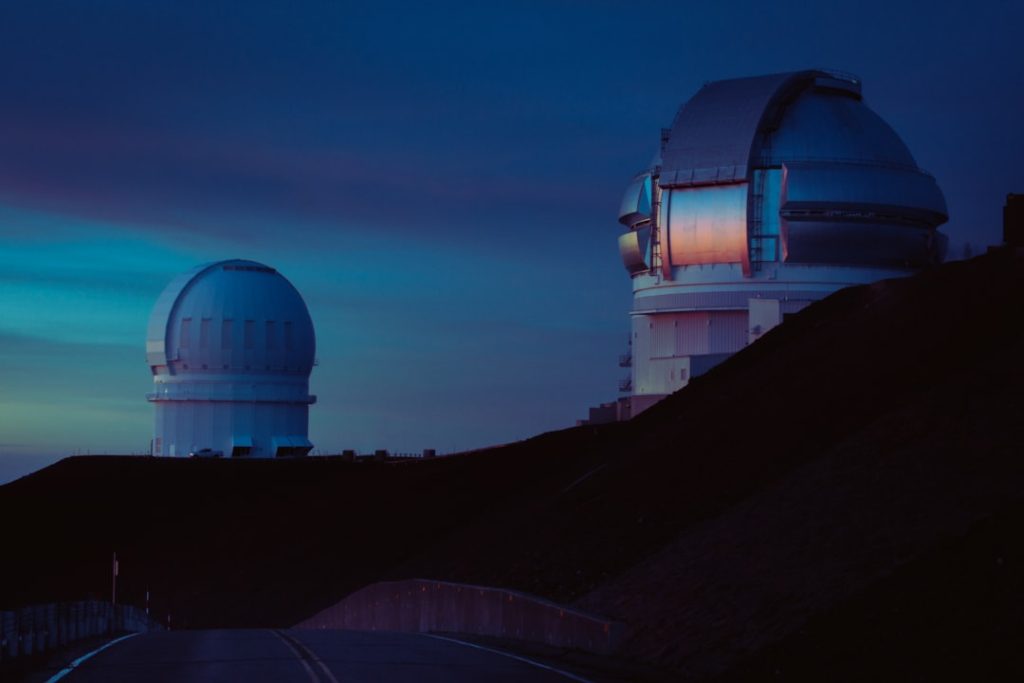
The astronomical community is experiencing what I believe to be one of the most significant technological leaps in modern space science. A groundbreaking observatory in Chile’s Atacama Desert has begun operations, and frankly, the implications are staggering for anyone interested in understanding our universe.
What makes this development particularly exciting is the observatory’s unprecedented capability to monitor the entire southern sky every few nights for a full decade. Think about it – we’re talking about creating the most comprehensive time-lapse movie of space ever attempted. This isn’t just incremental progress; it’s a paradigm shift that will fundamentally change how we study celestial phenomena.
Asteroid Discoveries at Breakneck Speed
The numbers alone tell an incredible story. In just its first year, scientists anticipate discovering one million previously unknown asteroids – matching what humanity has documented over the past two centuries. For researchers studying planetary defense and solar system formation, this represents an absolute goldmine of data.
What’s particularly fascinating is the recent discovery of rapidly spinning asteroids, including one massive space rock roughly twice the height of the Empire State Building that completes a full rotation in under two minutes. This finding challenges our understanding of asteroid composition – most objects this size should be loose rubble piles that would disintegrate at such speeds.
I think this discovery is crucial for planetary scientists and anyone concerned about Earth’s cosmic neighborhood. These findings suggest some asteroids are far more structurally intact than previously believed, possibly representing fragments from ancient planetary cores. For the general public, however, the immediate relevance might be limited unless you’re particularly passionate about space science.

Supernova Research Revolution
The observatory’s impact on stellar astronomy is equally impressive. Where previous groundbreaking research used fewer than 100 supernovae to discover dark energy, this facility expects to catalog 250,000 Type Ia supernovae annually. That’s an increase of several orders of magnitude that should help resolve ongoing debates about cosmic expansion rates.
What excites me most is the potential to discover “failed supernovae” – events where massive stars collapse without the spectacular explosions we typically associate with stellar death. These rare phenomena could reshape our understanding of stellar evolution, particularly for the most massive stars in the universe.
This research will be invaluable for cosmologists and theoretical physicists working on fundamental questions about dark energy and universal expansion. For amateur astronomers and space enthusiasts, it promises spectacular discoveries that will capture public imagination.
Tracking Interstellar Visitors
Perhaps the most intriguing capability involves detecting objects from other star systems passing through our cosmic neighborhood. Until recently, astronomers had identified only three such interstellar visitors. The observatory has already proven its worth by detecting an interstellar comet that other telescopes had missed initially.
I believe this capability represents one of the most scientifically valuable aspects of the project. These cosmic wanderers carry information about distant stellar systems, offering unprecedented insights into planetary formation processes beyond our solar system. The fact that we might discover anywhere from five to 500 such objects speaks to how little we currently understand about interstellar space.

Revolutionary Data Processing Challenges
The technical achievement here is remarkable – the observatory generates 20 terabytes of data and 7 million alerts nightly. This creates both opportunities and challenges that I think will define the next decade of astronomical research.
For data scientists and computer specialists, this represents an exciting frontier where astronomy meets big data analytics. The automated alert systems and machine learning applications required to process this information flow will likely find applications far beyond astronomy.
However, I suspect many traditional astronomers will struggle to adapt to this data deluge. The days of carefully studying individual objects are giving way to statistical analysis of vast datasets – a transition that won’t suit everyone in the field.
Broader Implications for Science
What truly matters here isn’t just the individual discoveries, but the methodological revolution this represents. We’re witnessing the birth of truly large-scale, automated astronomical surveys that will dominate the field for decades.
This development will be most beneficial for researchers comfortable with big data approaches and statistical analysis. Graduate students entering astronomy today should prepare for a field dramatically different from what their professors experienced. Conversely, astronomers preferring detailed studies of individual objects may find fewer opportunities in this new landscape.
For the broader public, this observatory promises a steady stream of spectacular discoveries that will keep space science in the headlines. The ability to predict small asteroid impacts days in advance could turn meteor watching into a planned public event rather than a lucky coincidence.
In my opinion, we’re witnessing the beginning of astronomy’s industrial age – a shift from artisanal observation to mass production of cosmic data. The scientists who adapt to this new paradigm will unlock secrets of the universe at an unprecedented pace.
Photo by Paxton Tomko on Unsplash
Photo by Renato Ulpiano on Unsplash
Photo by Luella Wong on Unsplash