
Unleashing Modern AI on Decade-Old Hardware: A Reality Check on Performance Claims
The Hardware Underdog Story That Challenges Everything
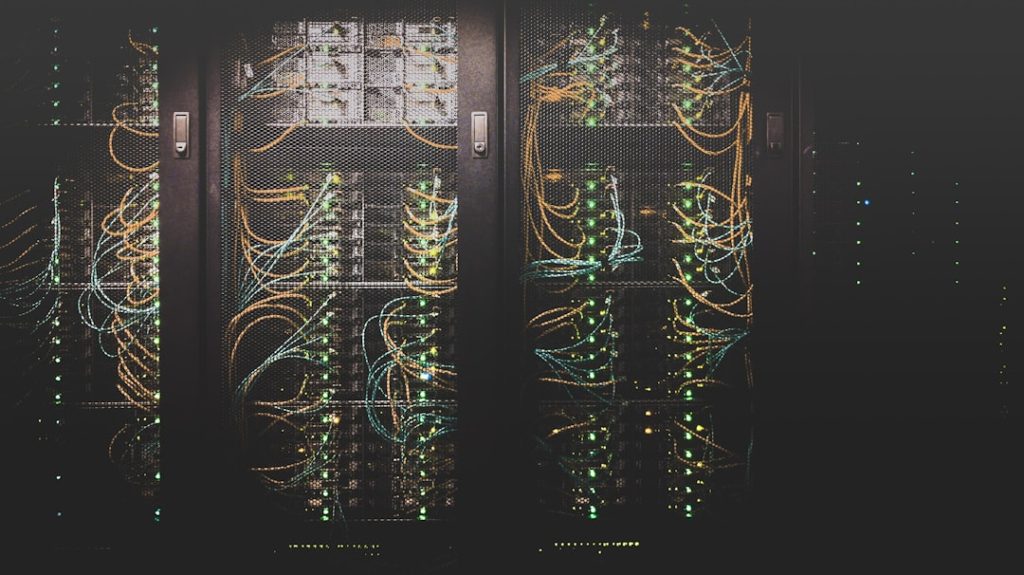
I’ve always been skeptical of the tech industry’s obsession with bleeding-edge hardware for AI workloads. While everyone chases the latest GPUs and premium processors, I decided to put that assumption to the test using hardware that most would consider obsolete: a 2016 Intel Xeon server with DDR3 memory and no graphics card whatsoever.
What I discovered challenges the conventional wisdom about what’s truly necessary for running sophisticated AI models. This isn’t just an academic exercise – it’s a wake-up call for anyone who’s been told they need expensive, cutting-edge hardware to participate in the AI revolution.
The Forgotten Beast: Understanding Memory-Bound Workloads
My test machine represents everything the modern AI world has supposedly left behind. The Intel Xeon E5-2620 v4 processor from 2016 runs at a modest 2.10 GHz across 8 physical cores with 16 threads. The 128 GB of DDR3 memory operates at speeds that are literally five to six times slower than current laptop RAM. There’s no GPU, not even integrated graphics.
Yet here’s what most people don’t understand about AI inference: raw computational power isn’t usually the bottleneck. The real limitation is memory bandwidth – the speed at which data can move from system memory to the processor. This is what experts call the “memory wall,” and it affects everything from budget hardware to million-dollar GPU clusters.
When you watch text streaming from an AI system, you’re witnessing a memory-bound process. The processor spends most of its time waiting for massive weight matrices to transfer from RAM, not performing calculations. This fundamentally changes what hardware actually matters for AI workloads.
Why This Matters More Than You Think
This insight is crucial for small businesses, researchers, and enthusiasts who’ve been priced out of AI experimentation by hardware costs. If memory bandwidth is the real constraint, then older servers with large amounts of RAM might actually outperform expensive modern systems in certain scenarios.

The Software Engineering Reality Behind AI Performance
Running modern AI models on legacy hardware isn’t just about throwing more memory at the problem – it requires understanding optimization techniques that mainstream tools deliberately hide from users. Popular AI platforms prioritize ease of use over performance, which means they leave significant optimizations on the table.
The solution involves speculative decoding, a technique where a smaller “drafter” model generates multiple token predictions that a larger “verifier” model then validates in parallel. This approach exploits the fact that CPU computation is relatively cheap compared to memory bandwidth, allowing the system to generate text significantly faster than traditional token-by-token generation.
Memory management becomes critical on older hardware. Techniques like runtime weight repacking reorganize data structures to match CPU cache layouts, while memory locking prevents the operating system from swapping AI weights to disk – a performance killer that many users never even realize is happening.
The Hidden Complexity Problem
What frustrates me most about the current AI landscape is how these optimizations are buried behind complex command-line interfaces with minimal documentation. A single inference session might require 25+ different configuration flags, many of which fail silently or conflict with each other. This creates an artificial barrier that keeps advanced AI capabilities locked away from users who don’t have deep systems programming knowledge.
Who Benefits From This Approach (And Who Doesn’t)
This hardware-optimization strategy works best for specific use cases and user types. Research institutions with limited budgets can leverage existing server infrastructure instead of purchasing new GPU clusters. Small businesses running customer service chatbots or content generation tools can avoid ongoing cloud API costs. Hobbyists and students can experiment with state-of-the-art models without significant financial investment.
However, this approach definitely isn’t for everyone. Organizations requiring real-time inference at scale will still need modern hardware. Users who prioritize plug-and-play simplicity over performance will find the configuration complexity overwhelming. Applications requiring the absolute latest model architectures may not have optimized implementations available for CPU-only deployment.

The Skills Gap Reality
The biggest limitation isn’t hardware – it’s expertise. Successfully optimizing AI workloads for legacy systems requires understanding memory hierarchies, cache behavior, and low-level system configuration. Most users lack this background, which is exactly why simplified tools exist in the first place.
Rethinking AI Infrastructure Assumptions
My experiment with decade-old hardware reveals a fundamental disconnect between marketing narratives and technical reality. The AI industry has created an artificial scarcity mindset around hardware requirements, partly because cloud providers benefit from convincing users they need expensive infrastructure.
The truth is more nuanced. While cutting-edge hardware absolutely provides benefits for specific workloads, many practical AI applications can run effectively on much more modest systems when properly configured. The key is matching the optimization strategy to the hardware constraints rather than simply throwing more expensive components at performance problems.
This has broader implications for AI democratization. If we can run sophisticated language models on recycled server hardware, then the barrier to AI experimentation isn’t primarily financial – it’s educational. The real challenge is developing better tools and documentation that make these optimizations accessible to users without advanced systems programming backgrounds.
The Future of Accessible AI
I believe we’re approaching a turning point where software optimization will matter more than hardware specifications for many AI use cases. As model architectures become more efficient and optimization techniques improve, the performance gap between premium and budget hardware will continue to narrow.
This shift could fundamentally change who can participate in AI development and deployment, moving us away from a world where only well-funded organizations can afford to experiment with advanced models.
Photo by Taylor Vick on Unsplash
Photo by Kevin Ache on Unsplash